Active leaks and ceiling stains
We trace the leak to its entry point, then repair the roof surface and flashing details that actually control water. If interior staining is present, the priority is stopping moisture at the roof first.
Serving LaBelle, Florida & surrounding areas
Mon–Fri 8am–6pm · Sat 9am–2pm
Roof Repair · LaBelle, Florida
Stop leaks, protect the structure, and get a clear repair plan backed by a careful roof inspection and quality materials.
Local roof assessment
If you are searching for roof repair LaBelle FL, you are probably dealing with a leak, missing shingles, or storm-related damage that needs attention before it spreads. Water moves fast: it follows decking seams, runs along rafters, and can show up as a ceiling stain far from the actual entry point. The right fix starts with finding the true source, then repairing the roof system in a way that matches the existing materials and installation details.
LaBelle Roofing focuses on repair work that restores the roof's water-shedding layers, not just the visible surface. That means checking the common weak points first—valleys, pipe boots, wall flashings, skylights, ridge caps, and fastener lines—then confirming what is happening underneath where it matters. In southwest Florida, wind-driven rain can push water uphill and sideways, so the repair approach needs to account for exposure and direction, not only where the drip appears indoors.
Repair capabilities
We trace the leak to its entry point, then repair the roof surface and flashing details that actually control water. If interior staining is present, the priority is stopping moisture at the roof first.
We replace torn or blown-off shingles, re-secure loosened areas, and address the edges and ridge where wind often starts lifting. We also check for creased shingles that look fine from the ground but fail after a storm.
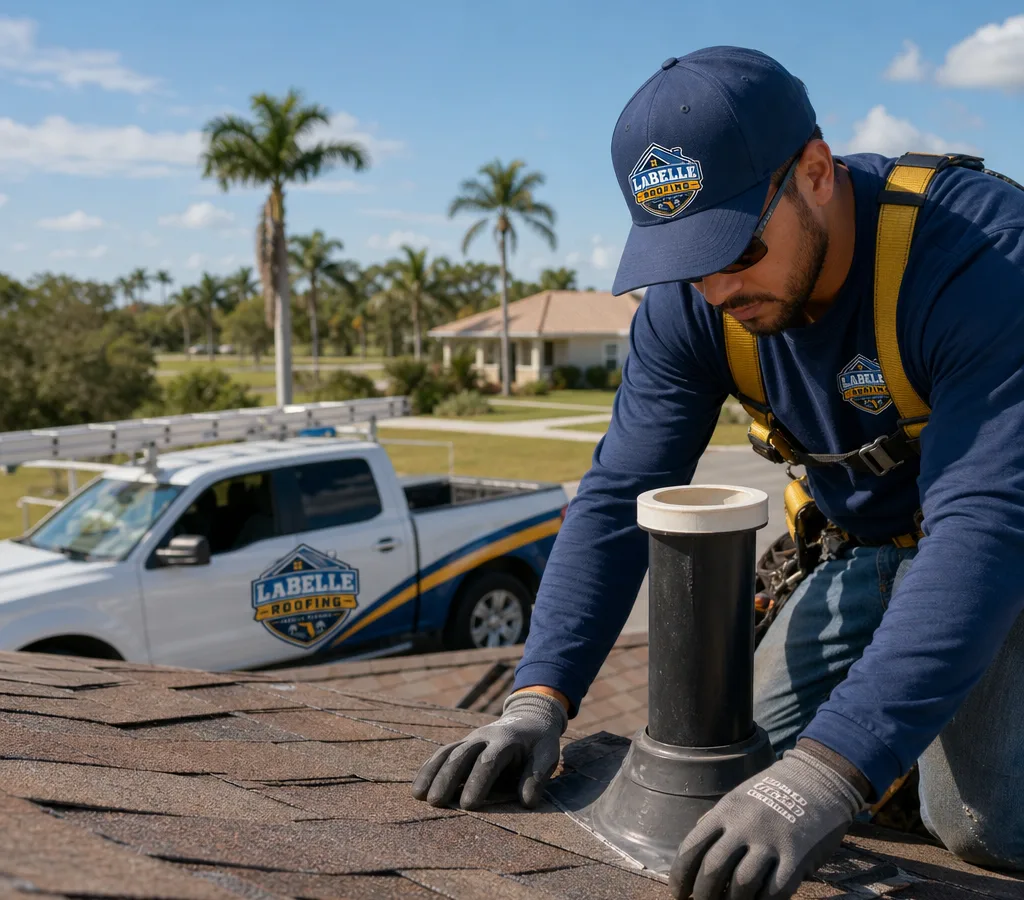
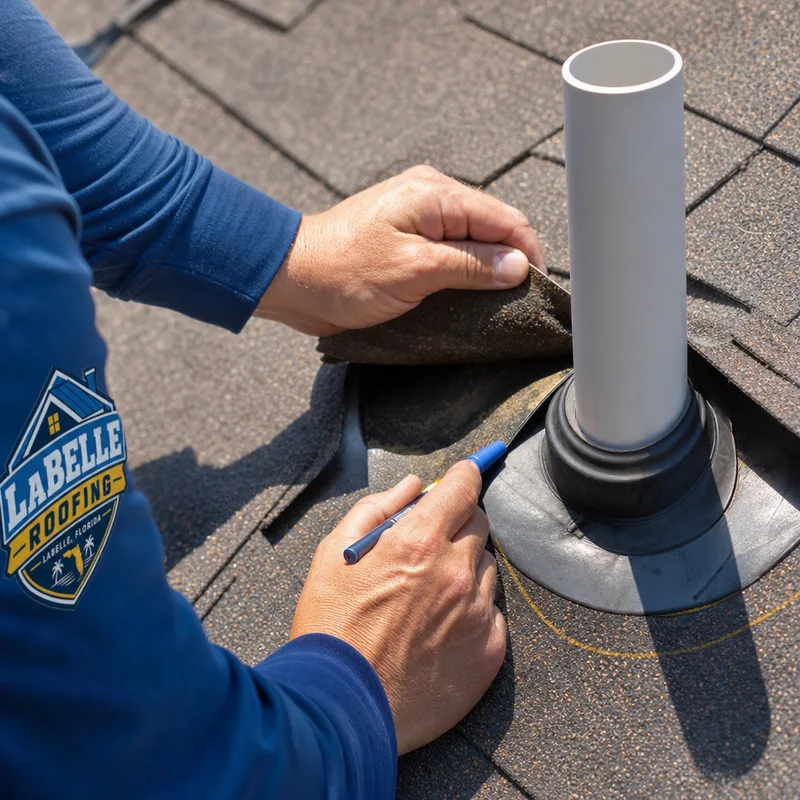
Pipe boots, vents, and other penetrations are frequent leak sources. We repair or replace flashing components and seal transitions correctly so the area does not reopen during heavy rain.
Valleys concentrate water flow and can hide damage under debris and granules. We inspect the valley metal or valley shingle weave, repair the underlayment where needed, and restore clean drainage paths.
For low-slope transitions and flat sections, we look for membrane splits, open seams, and edge termination issues. Repairs are chosen to match the existing system and avoid creating new weak points.
Loose drip edge, failed starter strips, and water getting behind the gutter line can lead to rot at the perimeter. We correct the edge details so water sheds off the roof the way it should.
Leak-source inspection
A roof leak is often a symptom, not the defect. Our inspection is built around the building's water path and the roof's most failure-prone details.
What we typically do during a repair visit:
In LaBelle, intense rain can reveal weak transitions quickly. A repair that is properly tied into surrounding materials and flashing details is what keeps the fix stable through the next round of storms.
Inspection to completion
A documented inspection and focused repair scope keep the work clear from the first call through final cleanup.
You share what you are seeing—stains, drips, missing shingles, or granules in gutters—and when it happens, such as only during wind-driven rain.
We inspect the roof surface and critical details, documenting conditions so the scope is based on what is actually there.
You get a clear explanation of the recommended repair and any alternate approaches when there are multiple correct ways to solve the problem.
We complete the repair with materials compatible with the existing roof system and correct nearby contributors such as loose fasteners, failing sealant, and lifted edges.
We verify the repaired area, remove debris, and walk you through what was done so you know what changed on the roof.
Repair scope
Every roof repair in LaBelle is scoped to the actual damage — from small shingle and flashing fixes to larger storm-damage repairs involving multiple leak points. The approach depends on roof type, pitch and access, how many areas are affected, and the repair method — shingle replacement, flashing rebuild, or membrane patch — plus whether decking or underlayment needs attention once opened. The exact repair plan is confirmed after an on-roof inspection and a written scope.
Book Your InspectionBuilt for local conditions
Roofing problems in this area often show up after heavy rain and wind, but the root cause can be slow-developing.
If you are comparing contractors, start with how they plan to locate the leak source and how they will restore the flashing and underlayment details around it. A good repair is specific: it names the area, the materials, and how the repair ties into the existing roof so it does not become the next weak spot.
When you want a local team that can handle inspection, repair, and follow-through, LaBelle Roofing is based in LaBelle and focused on work that keeps roofs watertight in real Florida weather.
Book Your InspectionHomeowner guidance
Scheduling depends on current demand and weather conditions, but leak situations are typically prioritized because damage spreads quickly once water gets past the roof surface. If rain is in the forecast, we can talk through temporary protection steps while the repair visit is being set.
Yes, and it is smart to repair lifted, creased, or missing shingles before the next heavy rain. In LaBelle, wind-driven rain can exploit small openings, so addressing storm damage early often prevents interior drywall and insulation damage.
Many issues are repairable when the surrounding roof materials are still in serviceable condition and the leak source is localized. If we see widespread aging or multiple failing areas, we will explain why repairs may not be the better long-term option, but the decision is based on what the roof actually needs.
We repair common residential roofing systems such as asphalt shingle roofs, and we also address leak-prone details like flashings and transitions that apply across many roof types. The recommended materials and repair method depend on matching what is already installed.
We do our best to match by style and color, but exact matches can be limited by the roof's age and product availability. When a perfect match is not possible, we explain the options, including using a compatible shingle or replacing a larger section for a more consistent look.
The most common leak sources are penetrations like plumbing vents, valleys where water concentrates, and wall flashing transitions where the roof meets a vertical surface. These details handle a lot of water and movement, so small failures show up quickly during Florida downpours.
Some repairs are considered maintenance, while larger scopes or structural work can trigger permitting requirements. We can review the scope with you during the inspection and explain what applies before work begins.
Plan the repair
Share what you are seeing and when it happens. We will inspect the roof, identify the leak source or damage area, and provide a written repair scope you can feel confident about.