Active leak triage
Locate the entry point, not just the drip location, and apply a targeted stop-gap measure so water is not continuing to run through decking and framing.
Serving LaBelle, Florida & surrounding areas
Mon–Fri 8am–6pm · Sat 9am–2pm
Emergency Roof Service · LaBelle, Florida
Fast help for active leaks and storm damage, with a clear plan to stop water intrusion and protect what is underneath.
Urgent roof stabilization
If you are searching for emergency roof service LaBelle FL, the priority is simple: stop water from spreading and prevent a small opening from turning into widespread interior damage. LaBelle Roofing responds to urgent roof problems like active leaks, missing shingles, lifted metal panels, damaged flashing, and tree-limb impacts.
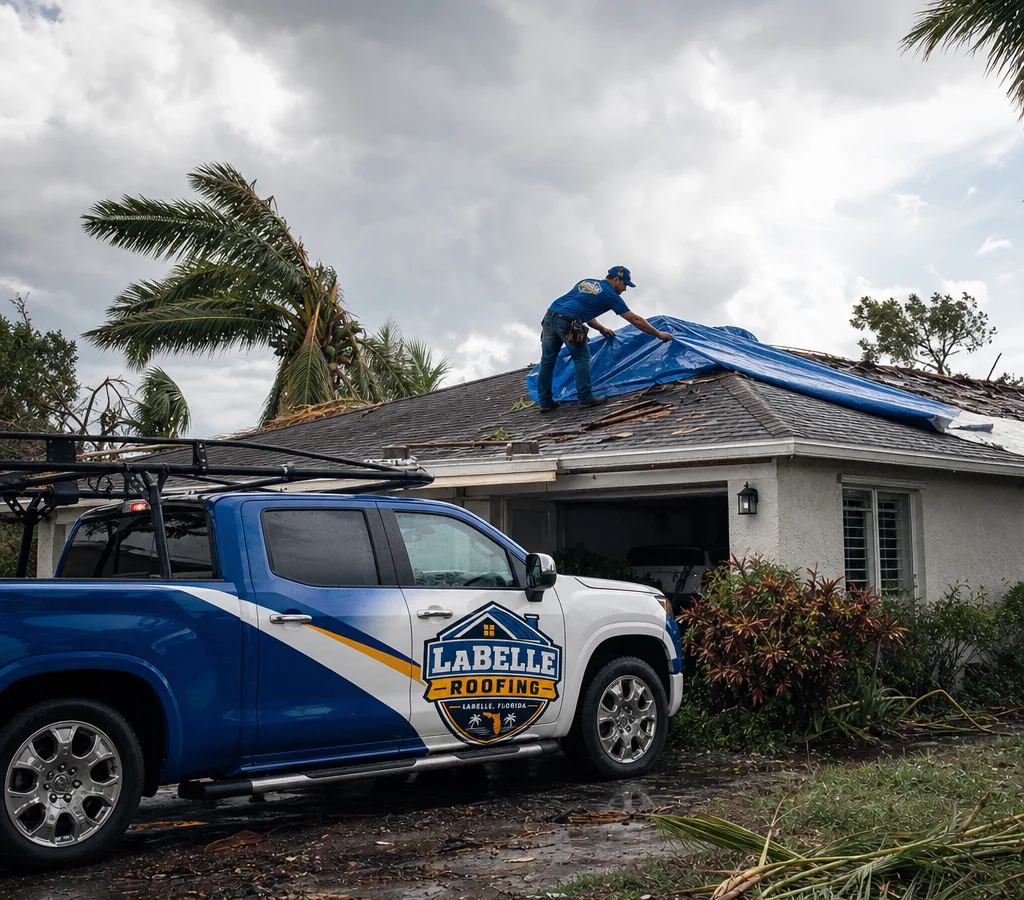
In Glades County, storms can move through fast and leave behind wind-driven rain that finds the weakest point in a roof system. The sooner the roof is stabilized, the more options you keep on the repair side. A quick temporary weather barrier, such as a properly secured tarp, often buys the time needed to perform a safer inspection and complete the right permanent fix.
Emergency work is different than routine roof repair. It focuses on immediate risk reduction: controlling water entry, checking common failure points such as valleys, penetrations, and flashing transitions, and identifying hazards like unstable decking or wet insulation. Once the roof is stable, you get a documented scope and repair plan you can make decisions on, including what should be repaired right away versus what can wait for drier conditions.
Emergency capabilities
Locate the entry point, not just the drip location, and apply a targeted stop-gap measure so water is not continuing to run through decking and framing.
Install a secured tarp or temporary patch where appropriate, with attention to wind uplift so the temporary protection does not create a bigger failure in the next squall.
Check for missing or creased shingles, lifted edges, exposed fasteners on metal, punctures, and damaged flashing at chimneys, vents, and wall transitions.
Evaluate hazards like slick surfaces, unstable decking, and downed limbs before anyone gets on the roof, especially after heavy rain or high winds.
Provide a straightforward explanation of what failed, what must be corrected to restore water-shedding, and what related areas should be inspected next.
Address common culprits like compromised flashing, deteriorated sealant around penetrations, and roof-to-wall transitions where wind-driven rain tends to push uphill.
Immediate homeowner steps
A leaking roof is stressful because the damage you can see inside is usually not where the water is getting in. These steps help limit loss while you wait for an emergency roofer:
When we arrive, the first goal is stabilization. That may mean a tarp, a temporary patch at a puncture, re-securing a lifted edge, or isolating a flashing failure until the permanent repair can be completed in appropriate conditions.
LaBelle Roofing provides local service expectations and coverage information for homeowners planning the next step.
Inspection to completion
The process moves from immediate safety and water control to a documented permanent repair.
We gather the basics: where the leak shows inside, when it started, what the storm did, and any visible damage. We also confirm access and immediate hazards like fallen limbs or power-line concerns.
The first on-roof actions focus on stopping water entry and preventing wind from worsening the opening. Temporary tarping is installed with proper edge fastening and overlap so it sheds water instead of trapping it.
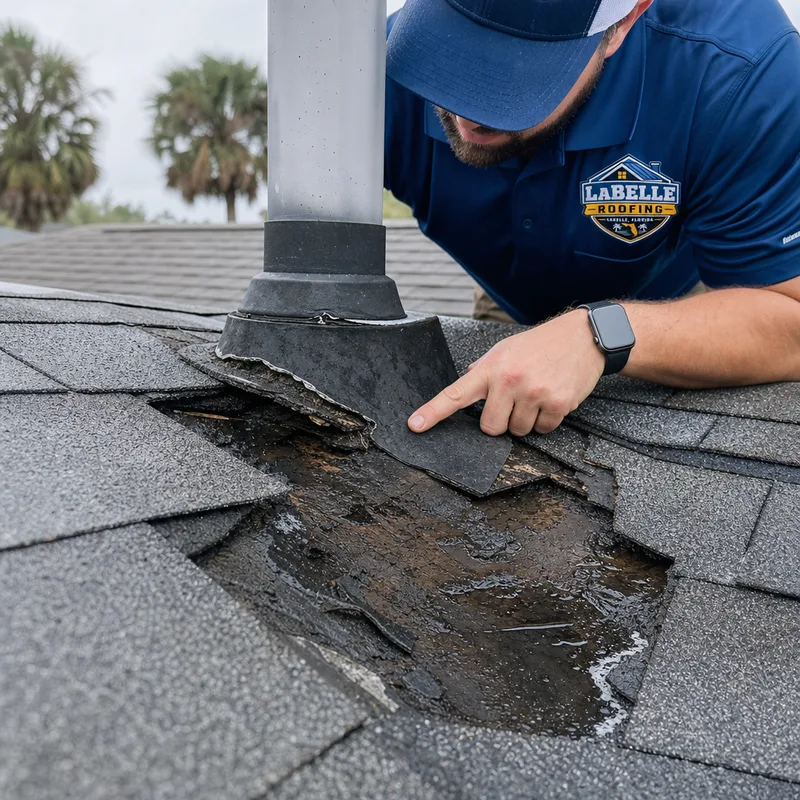
We inspect common failure areas such as valleys, roof penetrations, step flashing, and transitions where two roof planes meet. We differentiate between wind damage, age-related material failure, and flashing issues.
You get a clear description of what needs repair now, what we recommend inspecting next, and how the repair will be performed, including materials, method, and access plan.
Once conditions allow, we complete the permanent fix: replacing damaged materials, repairing flashing, sealing penetrations correctly, and verifying water-shedding paths so runoff goes where it should.
Emergency service scope
Emergency roof service in LaBelle starts with a rapid assessment and temporary stabilization, then moves into tarping, leak-point repair, or material replacement as the damage requires. After major storms, response also accounts for limited access, higher demand, and the need for rapid mobilization.
Final scope depends on roof height and pitch, how many areas are leaking, material type such as shingle, metal, or tile, how wet the system is, and whether decking or flashing has failed. The repair plan is confirmed after an on-site inspection of the affected areas.
Urgent repair conditions
Emergency calls often come in with a symptom, not a diagnosis. Here are common scenarios and what is typically involved:
If your roof is older or you have recurring leaks, emergency service is still the right first step. Stabilize now, then decide whether the best long-term move is a larger repair or a full replacement after you have a clear assessment.
Book Your InspectionHomeowner guidance
Response time depends on weather conditions and call volume, but emergency work is prioritized around active leaks and openings that are allowing water in. During severe storms, it may be safer to schedule the earliest window right after conditions improve so technicians can work without putting anyone at risk.
Sometimes, but only if it can be done safely and the tarp can be secured well enough to hold in wind. If conditions are too dangerous, the best approach is to control water inside, document the damage, and schedule the first safe window to tarp and stabilize the roof.
Yes. Emergency stabilization and repair methods change by roof type, but the goal is the same: restore a continuous water-shedding surface and address the flashing details where wind-driven rain typically gets in.
Not always, but after a storm it often is. Water can enter at one point and travel along framing before showing up as a stain, so an emergency inspection focuses on likely entry points above and uphill from the interior damage.
We can document visible roof conditions and the emergency measures taken, such as tarping and temporary repairs, along with photos when possible. Your insurer ultimately determines coverage, but clear documentation of storm-related damage and mitigation work is helpful for the claim process.
No. Even a slow leak can saturate insulation, swell decking, and damage drywall and framing. Getting emergency roof service quickly usually reduces how far water spreads and keeps the permanent repair scope smaller.
Stabilize the roof
Tell us what you are seeing inside and outside the home, and we will work with you on the fastest safe way to stabilize the roof and plan the permanent repair.