Photo documentation
We capture clear photos of problem areas and normal conditions, so you can see what we are describing without guessing.
Serving LaBelle, Florida & surrounding areas
Mon–Fri 8am–6pm · Sat 9am–2pm
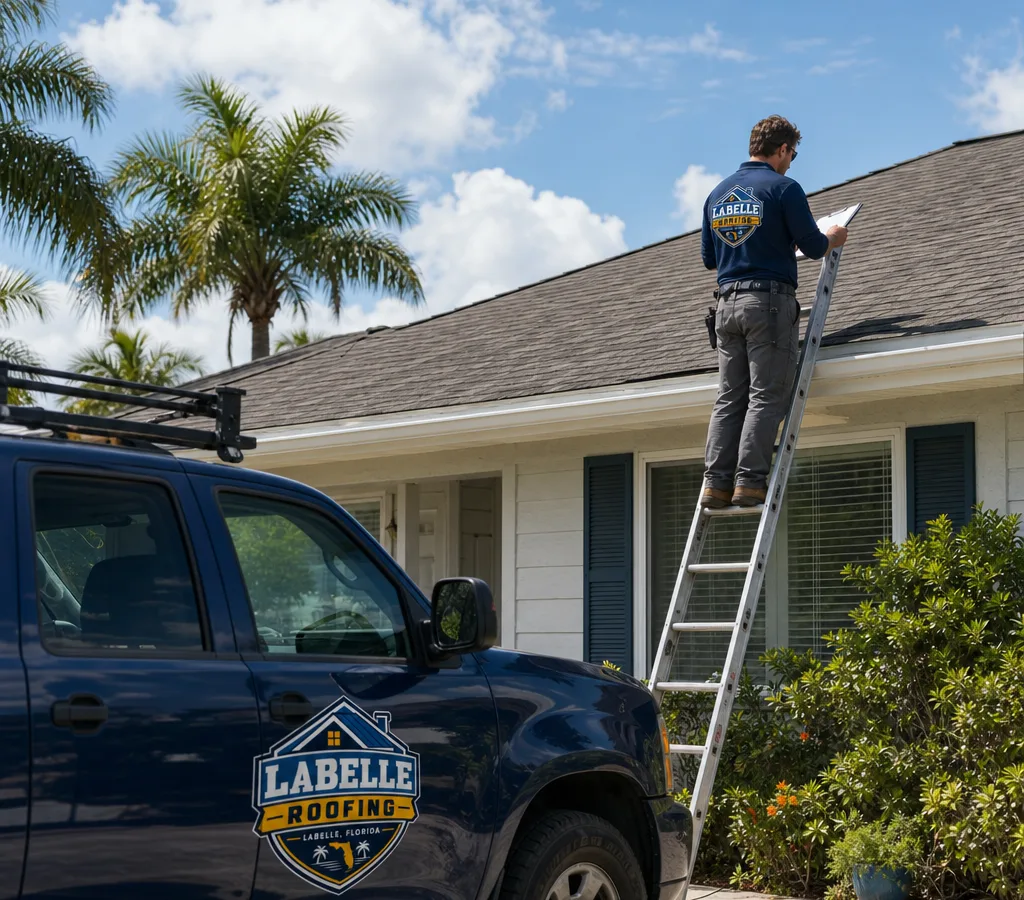
Roof Inspection · LaBelle, Florida
Get a clear, photo-documented assessment of your roof's condition, with practical next steps you can use for maintenance, repairs, or storm and insurance documentation.
Local roof assessment
If you are searching for roof inspection LaBelle FL, you are usually trying to answer a simple question: is my roof still protecting my home or building the way it should? A proper inspection goes beyond a quick glance from the ground. It checks the roof surface, flashing, penetrations, gutters and drainage points, and the visible attic-side clues that point to leaks or trapped moisture.
In LaBelle and across inland Southwest Florida, roofs take daily punishment from strong sun, humidity, heavy rain, and sudden wind events. Small problems like a lifted shingle tab, cracked pipe boot, or a nail pop can turn into interior staining and rotten decking after a few downpours. An inspection is the lowest-disruption way to catch those issues early and plan a repair before it becomes a bigger project.
LaBelle Roofing performs roof inspections for both residential and commercial properties in and around LaBelle (ZIP 33975). You will get a straightforward summary of what we see, what matters now versus what can be monitored, and what the next step looks like if any work is needed.
Inspection checkpoints
A useful roof inspection is systematic. We focus on common failure points first, then work outward so nothing important gets skipped.
We look for missing, torn, lifted, or creased shingles; excessive granule loss; exposed fasteners; deteriorated sealant; and soft spots that can hint at decking issues. On low-slope areas, we look for ponding risk, seam conditions, and punctures.
Most leaks start at joints, not the middle of a field of shingles. We inspect step flashing at walls, apron flashing, counterflashing, valley metal where present, drip edge, and roof-to-wall transitions.
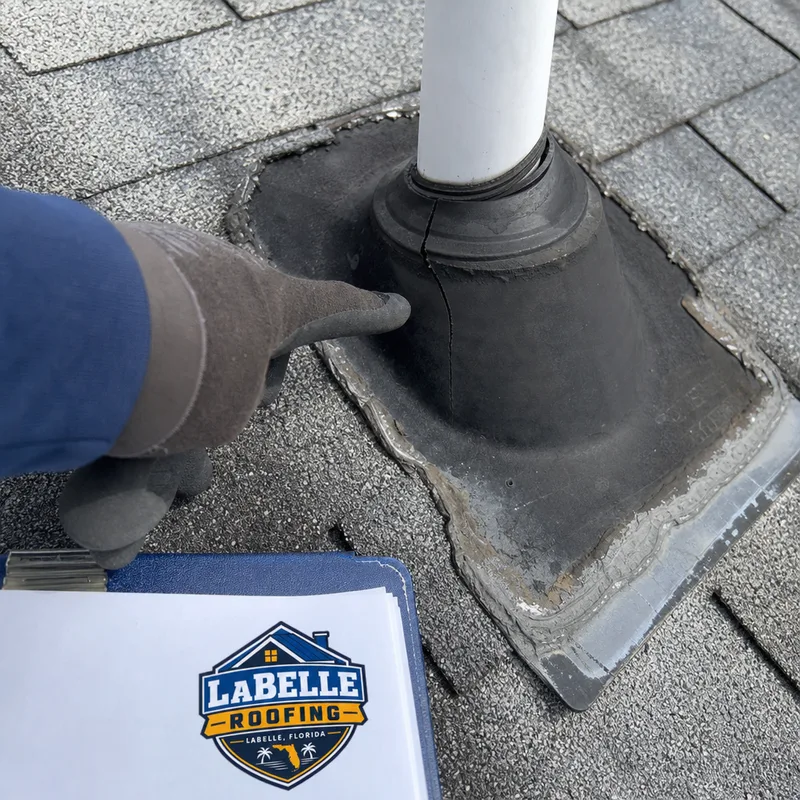
Plumbing vent boots, exhaust vents, skylights when present, and other penetrations are checked for cracked rubber, failed sealant, loose collars, and fastener problems.
Gutters, downspouts, scuppers where applicable, and roof edges are checked for overflow staining, clogs, and signs that water is backing up under edges.
If attic access is available, we look for water staining, mold-like spotting, wet insulation, daylight at penetrations, and ventilation imbalances that can accelerate shingle aging.
You do not need to know roofing terms to use the results. We translate the findings into clear priorities: items to repair soon, items to watch, and items that are cosmetic or expected wear for the roof's age.
Documented findings
We capture clear photos of problem areas and normal conditions, so you can see what we are describing without guessing.
You get an honest overview of roof health, including likely leak paths and wear points, without technical clutter.
If something needs attention, we outline practical repair options and what matters most for preventing water entry.
Inspection notes and photos help when you are planning maintenance, preparing for a sale, or gathering information for insurance conversations.
Some conditions do not require immediate work. We point out what to keep an eye on and what would trigger a follow-up.
Inspection process
A systematic visit turns visible roof conditions into clear priorities and practical next steps.
We start by asking what prompted the inspection: age concerns, a recent storm, a suspected leak, a purchase or sale timeline, or general maintenance.
We inspect the roof surface, penetrations, flashing, edges, and drainage points. If conditions require it, we recommend a safer alternative to walking a steep or fragile roof.
When the property allows safe access, we look for staining, moisture clues, and ventilation issues that can shorten roof life.
You get the results in clear terms: what is urgent, what is recommended, and what can be monitored. We also explain why each item matters.
If repairs are needed, we can provide a written scope. If the roof looks good, we will tell you that, and suggest a sensible schedule for future checkups.
Inspection scope
Every roof inspection in LaBelle is tailored to the property — roof size, steepness, access, and how detailed the documentation needs to be. A straightforward single-family home inspection covers the main roof surfaces and key details, while large homes, multi-structure properties, or commercial roofs with multiple sections call for a more extensive walk.
Scope drivers include roof height, number of penetrations, fragile materials, limited ladder access, and whether interior/attic inspection is available. The inspection plan is confirmed after we understand the property and the purpose of the inspection.
Inspection timing
A roof inspection is most useful when it answers a time-sensitive question or prevents a predictable problem.
Good times to book a roof check:
A few simple prep steps help the visit go faster:
If you are comparing companies, start with a contractor who will explain findings in plain language and document the roof condition with photos. You can also get familiar with our team and service area through LaBelle Roofing before scheduling.
Book Your InspectionHomeowner guidance
Yes, a photo-documented summary is part of a thorough roof inspection, and it is the best way to communicate roof conditions clearly. We document key areas like penetrations, flashing, valleys/edges, and any damage or wear we find, then explain what needs attention now versus what can be monitored.
Yes, a post-storm inspection is often most valuable before leaks show up inside. Wind can lift shingle tabs, damage flashing, or loosen accessories in ways that do not drip immediately, especially until the next heavy rain. We focus on wind-damage patterns, edge conditions, and common entry points around vents and transitions.
We choose the safest method that still gives a reliable assessment. Many roofs can be walked safely, but steep pitches, fragile materials, wet conditions, or excessive heat can change that. When a roof should not be walked, we inspect from stable ladder positions and other safe viewpoints and document what we can see clearly.
Common inspection findings include aging or cracked sealant, failing pipe boots, lifted or damaged shingles after wind, flashing issues at walls and valleys, and drainage problems that push water where it does not belong. Florida sun and humidity speed up the breakdown of exposed components, so small exterior defects can become leak paths during heavy rain.
A roof inspection can help by documenting current conditions with photos and notes, which supports clear communication with your insurer. We cannot decide coverage, but we can identify damage patterns, point out likely water-entry locations, and provide a written scope if repairs are needed.
Many residential roof inspections take about 45 to 90 minutes on-site, depending on roof size, height, complexity, and whether attic access is available. Larger properties and commercial roofs can take longer because there are more penetrations, transitions, and sections to document.
Schedule your inspection
Schedule a roof inspection in LaBelle to identify damage early, document what you have, and get a practical plan for what to repair now and what can wait.